Choosing an automatic painting machine supplier for large steel structures requires more than comparing machine prices or spray-gun quantities. Beams, columns, box sections, pipes, frames, and fabricated assemblies differ significantly in size, profile complexity, coating specification, and handling method. Equipment that performs well on simple components may struggle with recessed areas, changing cross-sections, or mixed production batches.
A reliable evaluation should examine workpiece compatibility, spray-path control, coating parameters, paint recovery, workshop layout, maintenance, and technical support. The following checklist can help steel fabricators assess whether proposed automatic spray painting equipment is suitable for their actual production conditions.
Confirm Workpiece Size Before Planning Structural Paint Spraying
The first step is to define the full workpiece range rather than providing only one representative drawing. The supplier needs to know the minimum and maximum length, width, height, weight, and profile type expected during normal production.
Important information includes:
H-beams, columns, pipes, box sections, and fabricated frames
Maximum external dimensions and passing clearance
Minimum spacing between structural features
Openings, stiffeners, flanges, corners, and recessed surfaces
Workpiece weight and center of gravity
Loading, supporting, turning, and unloading methods
Expected variation between production batches
These details determine the required machine travel, spray-gun reach, sensor arrangement, conveyor clearance, and supporting structure.
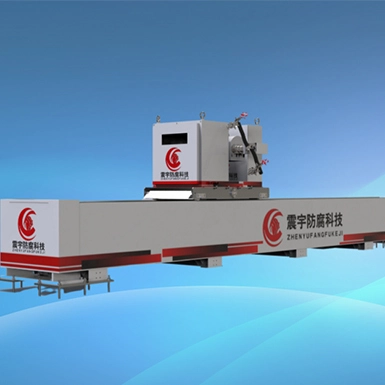
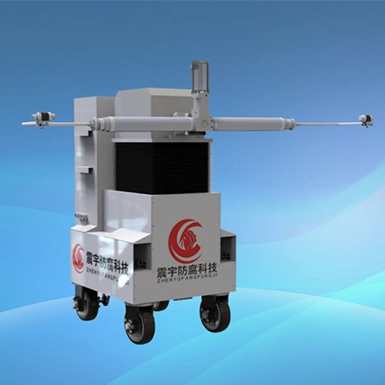
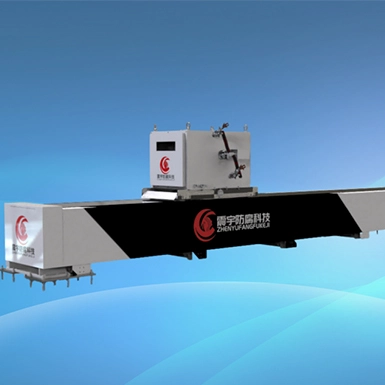
ZHENYU develops non-standard systems according to customer requirements. For its published steel-structure equipment range, the company states that systems can be designed with a maximum passing width of 2.3 metres and a maximum spraying construction width of 2.0 metres. Final dimensions still need to be confirmed against the customer’s drawings and production process.
Check How the Automated Spray Painting Machine Generates Its Spray Path
Large steel structures rarely consist of one simple flat surface. The spraying system must recognize or be programmed for webs, flanges, edges, corners, curved sections, and changes in workpiece height.
Ask the supplier how the automated spray painting machine generates and adjusts its path. Common approaches may include coordinate input, stored programs, component data, sensors, or processing based on a three-dimensional model.
ZHENYU’s steel-structure equipment allows operators to input X, Y, and Z coordinate parameters through the main control computer so that the corresponding machine movements can be called automatically. Its automatic spraying line can also use component information from a 3D model to develop the coating path.
During evaluation, request answers to the following questions:
How is a new component added to the system?
Can existing programs be copied and modified?
How does the system respond to dimensional variation?
Can spray-free areas be defined?
How are corners and overlapping passes handled?
Can operators adjust the path without rewriting the complete program?
A technically advanced system is only valuable when production staff can configure it efficiently for real orders.
Review Spray Parameters and Coating Thickness Control
The proposed equipment should allow controlled adjustment of spray pressure, gun angle, working distance, travel speed, paint output, and pass overlap. These parameters influence film thickness, appearance, transfer efficiency, and the risk of defects.
For each coating system, provide the supplier with:
Process information
Required details
Coating type
Primer, intermediate coat, topcoat, or fire-protection coating
Target thickness
Required wet and dry film thickness per layer
Paint properties
Viscosity, solids content, and approved thinning range
Application method
Airless, air-assisted, or another spray process
Surface condition
Blast-cleaned steel, shop primer, or previously coated surface
Quality criteria
Acceptable limits for sagging, misses, overspray, and appearance
ZHENYU states that its automatic paint spraying equipment can fine-tune process parameters to control film thickness and improve uniformity across the spraying surface. Its automatic line also controls pressure, spray angle, distance, and speed to reduce problems such as missed areas, sagging, uneven coating, and excessive paint mist.
A supplier should demonstrate these capabilities with representative components rather than relying only on a standard flat test panel.
Evaluate Paint Consumption and Paint Recovery
Paint cost can represent a major portion of total coating expenditure. A purchasing review should therefore cover both application efficiency and the handling of overspray.
Ask how the system controls:
Paint output during acceleration and deceleration
Gun triggering at component edges
Overlap between adjacent passes
Spraying when no workpiece is present
Paint remaining in hoses and supply equipment
Color or coating changes
Overspray capture and collected paint waste
ZHENYU’s automatic line can calculate expected paint consumption before spraying based on component parameters, quantity, and specified coating thickness. This gives the operator a reference value before production begins.
“Paint recovery” should also be defined carefully. In many industrial coating systems, captured overspray cannot simply be returned to the paint supply. The supplier should explain whether the system collects solid paint mist for disposal, recovers reusable material, or only improves transfer efficiency by controlling the spray path.
ZHENYU’s line incorporates air circulation and centralized collection of solid paint-mist particles, with the exhaust arrangement designed for connection to a VOC treatment system.
Check Production Flow and Workshop Integration
An automatic machine should fit the complete production process, not become an isolated spraying station. Review how workpieces enter, move through, and leave the system.
The proposed layout should account for:
Loading and unloading space
Surface preparation and dust removal
Primer and topcoat sequences
Flash-off, drying, and curing time
Conveyor or transfer equipment
Inspection and touch-up positions
Ventilation and VOC treatment
Maintenance and emergency access
ZHENYU’s automatic paint line solutions can integrate loading and unloading, pretreatment, drying, the spray booth, curing, PLC control, and filtration. The company also states that its equipment can spray upper and lower component areas in one operation, reducing secondary turning and waiting time before repositioning.
Before approving the project, compare the proposed cycle time with upstream fabrication and downstream drying capacity. A fast spraying machine will not increase total output when another stage remains the main bottleneck.
What to Ask an Automatic Painting Machine Supplier
A capable supplier should provide more than an equipment quotation. The proposal should explain which assumptions were used and which information still requires confirmation.
Request the following:
Recommended equipment configuration and working envelope
Supported workpiece profiles and excluded geometries
Spray-path generation and program-change procedure
Expected cycle time for representative components
Spray-gun, pump, control, and sensor specifications
Estimated paint and utility consumption
Booth filtration and VOC-interface requirements
Installation, commissioning, and training scope
Preventive-maintenance schedule and spare-parts list
Warranty terms and after-sales response procedure
ZHENYU conducts mechanical and software operation testing before equipment leaves the factory. Its service process also covers fault recording, technical analysis, solution development, on-site repair, and service documentation.
FAQ About Automatic Spray Painting Equipment
Can one automatic painting machine handle different steel profiles?
Yes, but the workpiece range must be defined during design. Machine travel, spray-gun reach, support method, and software programs must accommodate every required profile.
How is the spray path created for a new workpiece?
It may be generated from coordinate data, a stored program, sensor input, or a 3D model, depending on the system configuration.
Can automatic spray painting equipment control coating thickness?
The equipment can improve repeatability by controlling paint output, speed, distance, angle, and overlap. Final thickness should still be verified through the factory’s inspection procedure.
Does automated spraying eliminate manual touch-up?
Not always. Complex joints, concealed surfaces, and unusual component features may still require inspection or limited manual repair.
What information should be sent to the supplier?
Provide drawings or 3D models, workpiece dimensions, weights, annual output, coating specifications, required film thickness, workshop layout, and applicable environmental requirements.
Conclusion
Selecting an automatic painting machine supplier for large steel structures requires a detailed review of workpiece size, spray-path programming, coating control, paint handling, line integration, and after-sales support. Buyers should base the decision on representative components and actual production data rather than a general machine description.
By reviewing drawings, coating requirements, production volume, and workshop conditions, ZHENYU can develop customized automatic spray painting equipment for different steel-structure coating projects.
 Tel/WhatsApp 400-6671776
  baoyusheng666@163.com
 English