A clear wind turbine paint specification converts corrosion, weathering, erosion, and appearance requirements into measurable production instructions. It should define the substrate condition, surface preparation, coating products, layer sequence, dry film thickness, environmental limits, curing time, inspection method, and acceptance criteria.
The specification must also distinguish between steel tower sections and composite blades. Towers primarily require long-term corrosion protection, while blade coatings must combine surface smoothness, flexibility, weather resistance, and protection against rain or particle erosion. Automated equipment can improve repeatability, but only when its spray parameters are configured around the approved coating system.
Define the Wind Turbine Paint Specification by Component and Environment
The coating system should be selected according to where the component will operate and the type of substrate being protected. Onshore towers may face humidity, ultraviolet exposure, industrial pollution, and temperature changes. Offshore towers experience additional salt spray, persistent moisture, and severe corrosion conditions.
ISO 12944 classifies the principal environments affecting coated steel structures and provides a framework for developing protective paint specifications. It also emphasizes that design, surface preparation, coating selection, and expected durability must be considered together rather than treating paint as an isolated material choice.
The project specification should identify:
Onshore or offshore operating environment
Tower, blade, nacelle, foundation, or auxiliary structure
Carbon steel, galvanized steel, composite, or repaired substrate
Required durability and maintenance expectations
Factory application or field repair
Approved coating products and color
Required inspections and acceptance limits
A coating schedule intended for a tower should not be copied directly for a blade. The substrates, movement, exposure, and failure modes are different.
Set DFT Requirements for Each Wind Turbine Coating Layer
Dry film thickness, or DFT, is the thickness remaining after the applied coating has cured. A complete wind turbine coating specification should state the nominal DFT for each layer, the total system thickness, and the permitted minimum and maximum values.
Too little coating may reduce barrier protection or leave weak coverage over edges and irregular surfaces. Excessive thickness can also create problems, including slow curing, cracking, solvent retention, sagging, or poor intercoat adhesion. The correct target must therefore come from the approved coating system and product data sheets.
For practical production control, the specification should define:
DFT requirement
What should be stated
Per-coat DFT
Target thickness for each primer, intermediate coat, and topcoat
Total DFT
Required combined thickness after all layers have cured
Minimum value
Lowest acceptable reading or area average
Maximum value
Upper limit permitted by the coating manufacturer
Measurement timing
When readings may be taken after application
Sampling plan
Number and location of measurements
Acceptance method
Rules for isolated low or high readings
ISO 19840 provides procedures for verifying dry film thickness on rough steel surfaces, including instrument adjustment, inspection areas, sampling, and acceptance criteria. The selected project standard should be clearly referenced so inspectors and applicators use the same method.
Wet film thickness may also be checked during spraying to identify deviations before the coating cures. Its target should be calculated from the specified DFT and the coating’s volume-solids content rather than estimated from appearance alone.
Plan the Layer Sequence for Towers and Turbine Blades
The layer sequence should give each coat a clear function. For steel towers, a common structure includes surface preparation, primer, intermediate protection, and a weather-resistant finish. Stripe coating may be required around welds, edges, bolts, and other areas where normal spraying may produce insufficient coverage.
A typical tower sequence can be organized as follows:
Surface preparation: Removes contamination, rust, mill scale, and weak material while creating the required surface profile.
Stripe coat: Adds protection around edges, welds, openings, and difficult geometries.
Primer: Supports adhesion and initial corrosion protection.
Intermediate coat: Builds film thickness and strengthens the barrier system.
Topcoat: Provides color, weather resistance, UV stability, and the final appearance.
The process for painting wind turbine blades is different because blades are normally composite structures. Surface defects may first require filling, profiling, sanding, and cleaning. The coating sequence can then include a compatible primer, finishing coat, and localized leading-edge protection.
A protective coating for turbine blades must withstand surface movement and repeated exposure to rain, airborne particles, UV radiation, and changing temperatures. Leading-edge areas usually need additional erosion resistance because they experience the most aggressive impact conditions. Commercial blade systems therefore use specialized finishing and high-build leading-edge layers rather than relying only on a general-purpose topcoat.
Control Automated Application Parameters Around the Paint Specification
Automation does not replace the coating specification. It translates the approved specification into repeatable machine movements and application settings.
For tower sections, the control program should coordinate:
Tower length and diameter at both ends
Required DFT for the current coat
Coating solids content and application data
Spray-gun pressure and paint output
Distance between the gun and surface
Gun angle and travel speed
Overlap between adjacent passes
Gun triggering at flanges and section edges
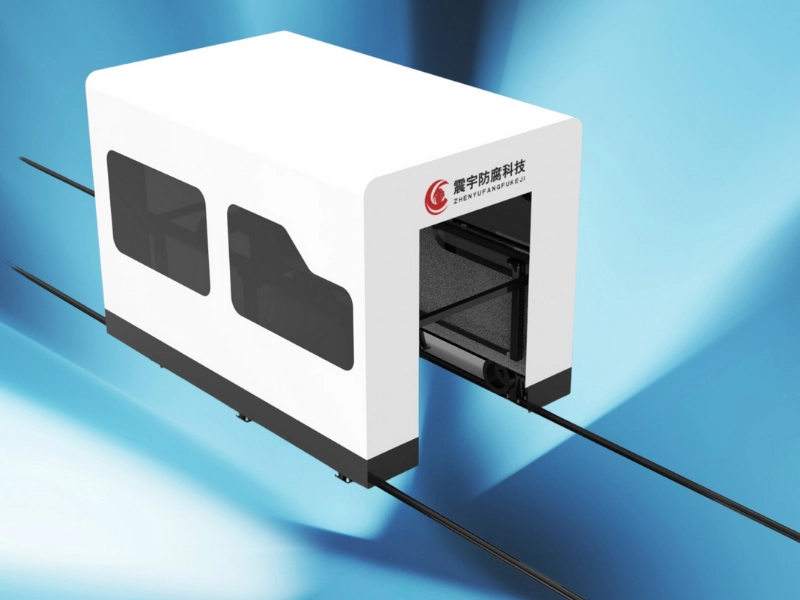
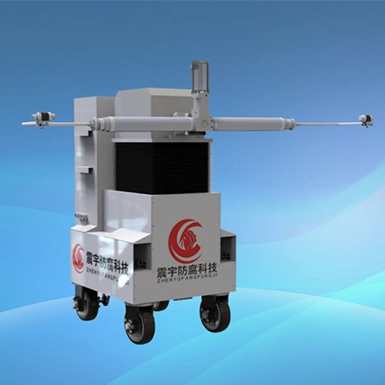
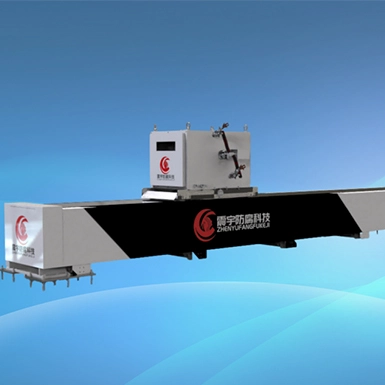
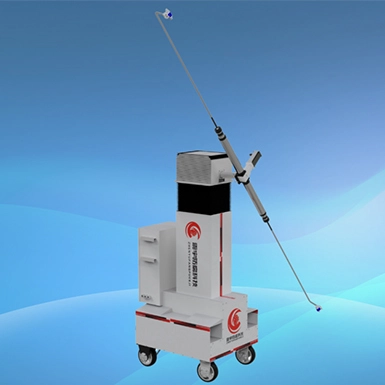
ZHENYU wind turbine coating machines use software control, touch-screen operation, and wireless operation. Operators can enter tower dimensions, required film thickness, and coating-related parameters, after which the system controls spray distance, speed, and angle. The equipment is available in configurations for the internal and external surfaces of onshore and offshore tower sections.
For painting wind turbine blades, automated equipment must additionally follow changing airfoil contours and maintain a suitable distance around curved surfaces. Although the machine structure differs from tower-spraying equipment, the same principle applies: movement, material delivery, overlap, and triggering must be connected to the coating specification.
Verify Surface Condition, Recoat Time and Final Quality
DFT alone cannot confirm that a coating system has been applied correctly. Inspection should begin before spraying and continue through every layer.
Before application, confirm surface cleanliness, surface profile, dust level, temperature, relative humidity, and the relationship between steel temperature and dew point. During coating, record batch numbers, mixing ratios, thinning, pot life, pressure, spray speed, and wet film thickness.
Before applying the next layer, verify that the previous coat has cured sufficiently and remains within the permitted recoat window. The inspector should also check for contamination, pinholes, dry spray, sagging, missed areas, overspray, and mechanical damage.
Final records should include DFT measurements, repaired locations, environmental conditions, coating consumption, equipment settings, inspection results, and approval signatures. These records make future maintenance decisions easier and allow production teams to repeat successful settings on similar tower sections.
FAQ About Wind Turbine Paint Specifications
What should a wind turbine paint specification include?
It should define the substrate, environment, surface preparation, approved coating system, layer sequence, DFT, curing conditions, recoat intervals, inspection methods, and acceptance criteria.
Is the paint system the same for turbine blades and towers?
No. Steel towers mainly require corrosion protection, while composite blades need compatible coatings that provide smoothness, flexibility, weather resistance, and erosion protection.
How is DFT controlled during automated spraying?
The system controls paint output, travel speed, spray distance, gun angle, and overlap. Wet and dry film measurements are still required to verify the programmed settings.
Why is leading-edge protection important when painting wind turbine blades?
The leading edge receives repeated impact from rain and airborne particles. A specialized protective layer helps reduce erosion and surface deterioration in this high-exposure area.
Can one automated program be used for every tower section?
Not without adjustment. Tower length, diameter, taper, coating type, DFT, and component details should be entered or confirmed for each production specification.
Conclusion
An effective wind turbine paint specification connects environmental exposure, substrate preparation, layer sequence, DFT, curing, and inspection into one controlled process. Towers and blades require different coating strategies, and every layer should have a defined protective function.
Automated application improves consistency when the equipment accurately controls spray distance, pressure, angle, speed, and overlap. By combining an approved coating specification with ZHENYU’s software-controlled wind turbine coating equipment, manufacturers can reduce application variation and achieve more repeatable protection across internal and external tower surfaces.
 Tel/WhatsApp 400-6671776
  baoyusheng666@163.com
 English