Investing in an automatic paint spraying line is not simply an equipment-purchasing decision. It affects labor allocation, paint consumption, coating consistency, production capacity, workshop utilization, and environmental management. A line with a higher initial price may deliver a lower long-term coating cost when it reduces manual work, overspray, rework, and production bottlenecks.
A practical return-on-investment calculation should therefore compare the complete annual cost of the current painting process with the expected annual cost after automation. The following framework helps steel structure manufacturers estimate labor savings, paint savings, throughput gains, and the approximate payback period of an automated coating project.
Why Calculate Automatic Paint Spraying Line ROI?
The purchase price alone cannot show whether an automation project is economically suitable. Two factories may install similar equipment but obtain different returns because their labor rates, workpiece sizes, coating specifications, production volumes, and existing paint losses are different.
An ROI calculation helps manufacturers answer several important questions:
How much manual spraying labor can be reassigned or reduced?
How much paint can be saved through more controlled application?
Will higher throughput generate additional usable capacity?
How much rework can be avoided through consistent coating thickness?
How long will it take for accumulated savings to recover the investment?
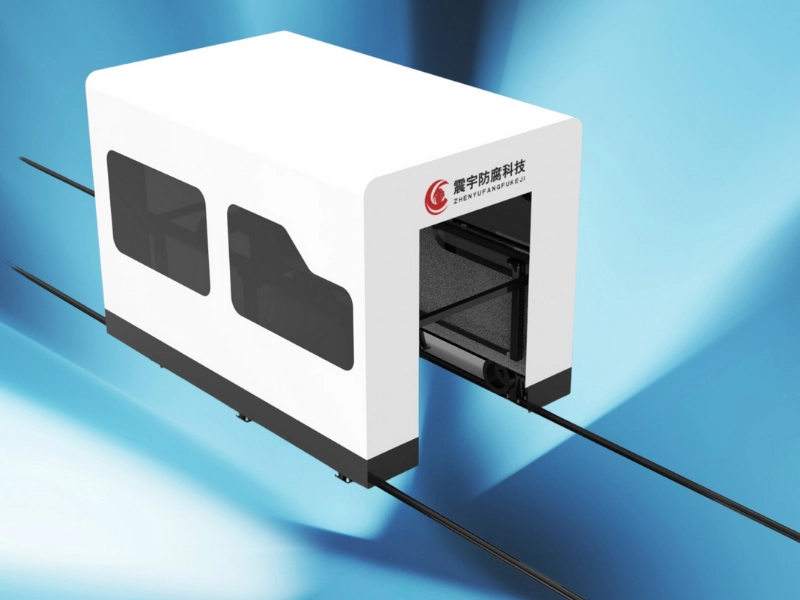
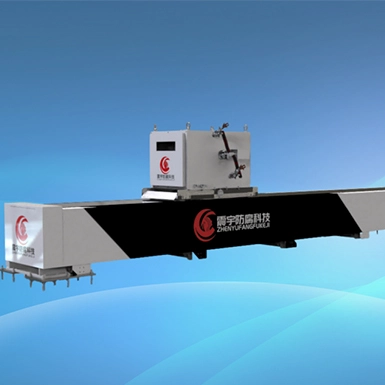
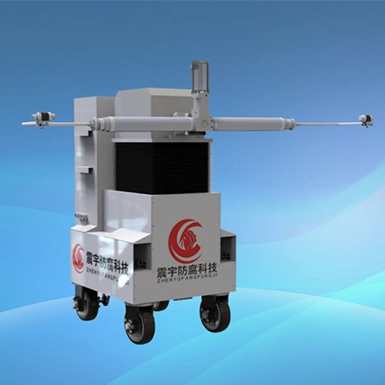
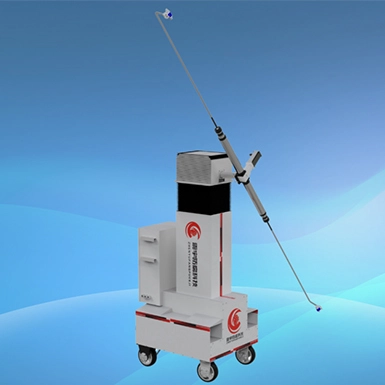
ZHENYU’s system uses digital processing based on component data and 3D models to generate spraying paths. It can also calculate expected paint consumption before spraying and control parameters such as pressure, angle, distance, and speed. These functions are designed to improve process consistency and reduce avoidable coating defects.
Cost Inputs for an Automatic Spray Painting Line
The first step is to calculate the project’s total initial investment rather than using only the quoted machine price.
Include the following items where applicable:
Investment item
What to include
Equipment cost
Spraying equipment, control system, sensors, and accessories
Installation
Assembly, positioning, wiring, piping, and commissioning
Workshop modification
Foundations, booth changes, ventilation, and utility connections
Paint supply system
Pumps, hoses, filters, and mixing equipment
Training
Operator, programmer, and maintenance training
Initial spare parts
Spray guns, seals, filters, and wear components
Production transition
Trial production and temporary downtime
Annual running costs should also be estimated. These may include electricity, compressed air, preventive maintenance, spare parts, software support, filter replacement, and the labor required to operate and maintain the line.
A realistic calculation separates one-time investment from recurring annual operating expenses.
Estimating Labor Savings from an Automatic Painting Line
Manual spraying involves more than the operator holding the spray gun. Labor may also be required for component turning, scaffold or platform movement, paint preparation, parameter adjustment, inspection, touch-up, and cleaning.
The annual cost per worker should include wages, employer contributions, insurance, overtime, training, and other employment-related expenses.
For example, assume a manual line requires six painters per shift, while the automated system requires two operators and one inspector. If three positions can be reassigned or removed from the coating process and the complete annual cost per employee is $35,000, the calculated labor saving would be:
3 × $35,000 = $105,000 per year
The actual result depends on production scheduling. A manufacturer running two or three shifts may obtain a greater labor-related return than a factory operating one low-volume shift.
Automation can also reduce indirect labor. ZHENYU’s automatic system is designed to spray the lower and upper areas of components in one operation, reducing the need to turn parts and wait for one side to dry before repositioning.
Calculating Paint Savings and Transfer Efficiency
Paint transfer efficiency describes the proportion of sprayed coating that reaches and remains on the target surface. The remaining material may become overspray, booth waste, filter loading, or paint deposited outside the intended area.
The financial value of improved transfer efficiency can be estimated with:
Annual paint saving = current annual paint cost × expected reduction in paint use
Suppose the current process consumes $300,000 of coating material annually. If controlled spray distance, travel speed, pressure, angle, and path planning reduce total paint use by 12%, the estimated saving is:
$300,000 × 12% = $36,000 per year
The percentage used in an ROI calculator should come from factory records, controlled trials, or supplier testing rather than a general industry estimate.
An automatic spray coating line may also reduce variation between operators. More repeatable film thickness can lower the risk of excessive coating in some areas and insufficient coverage in others. Paint savings should therefore include both direct material reduction and any decrease in touch-up or recoating.
Measuring Production Throughput Gains
Throughput improvement has financial value only when the factory can use or sell the additional capacity. A faster line does not automatically generate revenue if upstream fabrication or downstream curing remains the bottleneck.
Throughput benefit = additional saleable units × contribution margin per unit
For project-based steel structures, manufacturers may instead calculate additional coated tonnage, square meters, or completed components.
An automated system can improve throughput by reducing manual path planning, component repositioning, inconsistent spraying speed, and waiting time between operations. ZHENYU designs steel structure spraying systems for H-shaped, circular, box, column, and beam components, with non-standard configurations developed according to customer requirements.
Automatic Paint Spraying Line ROI Formula
Once the annual benefits and costs are established, use the following formulas:
ROI = annual net benefit ÷ total initial investment × 100%
Payback period = total initial investment ÷ annual net benefit
Consider this hypothetical example:
ROI factor
Estimated value
Total initial investment
$420,000
Annual labor savings
$105,000
Annual paint savings
$36,000
Annual throughput contribution
$90,000
Annual rework savings
$24,000
Additional annual operating cost
$30,000
Annual net benefit
$225,000
The resulting estimates are:
ROI = $225,000 ÷ $420,000 × 100% = 53.6%
Payback period = $420,000 ÷ $225,000 = 1.87 years
These figures are illustrative. A reliable project assessment should use the buyer’s production records and a proposed line configuration based on actual workpiece dimensions, coating systems, working hours, and target output.
Benefits That May Not Appear Directly in the ROI Calculation
Some advantages are difficult to express as immediate financial savings but can still influence the investment decision.
An automatic painting line can help stabilize spray distance, movement speed, coating angle, and film thickness. It may also reduce direct worker exposure to paint mist and lower the physical demands associated with manual spraying.
The ZHENYU system includes an air-circulation arrangement that can connect with a VOC treatment system, while solid paint-mist particles are collected for centralized treatment. This can support a cleaner working area and more organized environmental management.
Other potential benefits include easier production planning, more consistent coating records, reduced dependence on highly experienced manual painters, improved delivery predictability, and stronger capacity for larger-volume orders.
FAQ About Automatic Paint Spraying Line ROI
What is a reasonable payback period for an automatic paint spraying line?
There is no universal target. The acceptable period depends on capital policy, production stability, annual volume, labor cost, and expected equipment life. Many buyers compare the calculated payback with other available factory investments.
Which factor usually has the greatest impact on ROI?
Labor savings, paint consumption, and production volume normally have the strongest influence. Their importance varies according to the current manual process and local operating costs.
Should additional production capacity always be counted as revenue?
No. Count throughput gains only when the factory has sufficient orders and downstream capacity to sell or use the additional output.
How can paint savings be verified before purchasing?
Use current paint-consumption records and conduct trials using representative components, coatings, film-thickness requirements, and production conditions.
Can an automatic spray painting line handle different steel structures?
The equipment can be configured for different profiles and dimensions, but suitability must be confirmed using drawings, 3D models, component ranges, coating specifications, and workshop conditions.
Conclusion
An automatic paint spraying line ROI calculation should combine labor cost, paint transfer efficiency, production throughput, rework, operating expenses, and initial investment. Using only equipment price or an assumed paint-saving percentage can produce an unreliable result.
The best evaluation uses actual factory data and a proposed system matched to the workpieces and production process. ZHENYU can review component dimensions, coating requirements, line capacity, and workshop conditions to develop an automatic spray painting line solution and a more realistic investment estimate.
 Tel/WhatsApp 400-6671776
  baoyusheng666@163.com
 English